
QUOTE COMPARISON · ENGLISH BUYER GUIDE
Compare EV charger quotes on the same equipment and site-work scope
By Xiaochong Energy · · 6 min read
Two offers can describe the same number of charging points while price totals cover different deliverables. One may stop at packaged equipment. Another may include installation but leave software setup or connection work provisional. Before ranking bids, give each required item an owner, a price status and an acceptance condition. Keep “not priced” separate from “included at no additional charge.”
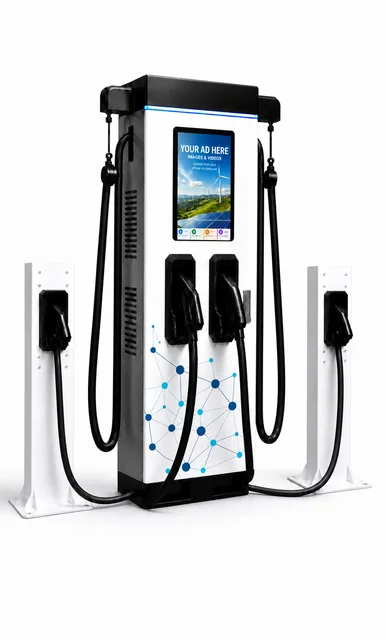
This is an original procurement comparison method, not a price benchmark, investment forecast or engineering design. Final electrical, civil, accessibility, payment, cybersecurity, certification and local-compliance decisions need qualified local review and model-specific documents. No cost, performance or certification outcome is guaranteed.
1. Define the deliverable before comparing totals
Use one dated comparison brief for every bidder. State the site, intended AC or DC equipment configuration, quantities, operating use, required interfaces and acceptance scope. Distinguish the number of cabinets from the number of outputs and the number of vehicles that the agreed configuration can serve concurrently. A nameplate rating alone is not an agreed operating outcome.
Reference the same site-information revision, drawings and survey assumptions. If a bidder proposes an alternative, keep it in a separate option column with its technical differences. Do not silently treat different configurations as interchangeable because the headline price is attractive.
Preserve each original offer. Your comparison sheet is a mapping of supplier commitments, not permission to rewrite them. Start a clarification list wherever a requirement cannot be matched to a quoted line. The RFQ checklist helps prepare the initial brief; this guide addresses the different task of comparing returned offers.
2. Give every line an explicit price status
| Status | Meaning in the comparison |
|---|---|
| Included | The supplier identifies the deliverable and confirms the quoted amount covers it. Record the offer reference and any limits. |
| Excluded | The offer does not supply it. Identify another responsible party and obtain a price if the project still requires it. |
| Provisional | An allowance or assumption is stated, but the final amount depends on an agreed measurement, survey or decision. Record that dependency. |
| Unpriced | The requirement has no usable price confirmation. Leave the amount unresolved, rather than entering zero. |
| Not required | The buyer has documented why the item is outside this specific project. This is a scope decision, not an inferred omission. |
Do not add a provisional allowance to a firm-price subtotal without labelling it. Show confirmed amounts, allowances and unresolved requirements separately. Where a row is bundled, reference the parent line so its amount is counted only once. A complete-looking total with hidden blanks is less useful than an honest incomplete comparison.
3. Separate equipment from the work around it
Use a short work-package list. Each package needs a supplier or owner, scope reference, quantity basis, price status and handover evidence. The following questions are procurement prompts, not a declaration that every project needs every item.
- Charger equipment: what exact model, configuration, accessories, interfaces and approved documents are supplied? Which options require separate confirmation?
- Transport and receiving: who arranges packaging, carriage, unloading, inspection and any storage? Record the agreed delivery point and contractual responsibilities. Use the delivery and storage checklist.
- Site works: who surveys and designs the installation, obtains required approvals, and prices the agreed electrical, civil and accessibility work? Request the qualified contractor's quantities and assumptions. Do not estimate cable, protection or transformer specifications from a sales photograph.
- Software and commercial setup: who configures the backend, communications, user access and any project-selected payment integration? Separate initial setup from recurring or usage-based fees.
- Commissioning and acceptance: who performs the agreed checks, witnesses results, resolves open items and hands over the records? “Installation included” does not by itself define those tasks.
- Service: distinguish warranty terms, remote assistance, local attendance, spare parts and maintenance labour. State which party handles each and which costs remain outside the equipment quote.
For a hosted site, do not infer payment responsibility from who owns the charger. The property owner may provide some works while the operator contracts others, but the actual allocation must be agreed. Record both the payer and the party accepting the work; they need not be the same organisation.
4. Compare commercial assumptions without inventing missing prices
Record quote date, validity, currency, payment stages, delivery assumptions and the stated tax or import-cost basis. Ask the relevant qualified advisers to resolve local treatment. Do not assign a duty exemption, subsidy or tax recovery merely to make one offer look cheaper.
If currencies differ, label the buyer's chosen comparison rate and date and preserve the original quoted currency. That conversion is a comparison assumption, not a supplier price commitment. Keep one-time purchase costs separate from recurring operating costs. For a recurring-cost scenario, use the same explicitly stated period and usage assumptions for each offer; do not present it as a guaranteed total cost of ownership.
The software and licence cost guide covers fee boundaries in more detail. The warranty and service guide helps identify what a support promise actually includes.
5. Use a clarification round before selecting the preferred offer
Consider a fictional depot reviewing Offer A for delivered equipment and Offer B for equipment plus selected site works. Neither is automatically better value. First map both offers to the same required work packages. Obtain a separate contractor quotation for A's required site work, check B's exclusions and identify any item already bundled into another line. Keep missing amounts visibly unresolved.
If a survey changes an assumption, request a dated revision showing the affected scope and quantity. Retain the earlier version for comparison. A revision should explain the change rather than merely replace the total. Where a clarification changes the common brief, give all relevant bidders the updated requirement through the buyer's procurement process.
- Send each bidder the mismatched or unanswered lines, with the same required baseline.
- Request written confirmation of inclusions, exclusions, allowance limits and dependencies.
- Confirm who owns every interface between equipment, site works and software.
- Record which gaps remain and whether they prevent a meaningful comparison.
- Assess the clarified scope, acceptance evidence and commercial terms together, not only the equipment subtotal.
Shared site infrastructure also needs separate treatment. Do not multiply a shared work package by the number of chargers if it is already quoted once. Conversely, do not spread a first-stage cost over future units that are not actually in the agreed purchase. Any per-unit comparison must state its quantity and what an accepted unit means.
6. Carry the agreed comparison into acceptance
Link the selected offer revision and clarification record to the purchase specification. Define the evidence for the equipment package, installation package and integrated system separately. A charger arriving on site does not prove that the entire site has been commissioned or accepted.
Use the factory and site acceptance checklist to organise the agreed tests and open items. Assign responsibility for retesting and corrective work before it becomes a dispute. Record changes through the project's authorised process; do not substitute a different item and assume the original acceptance remains valid.
The free RFQ builder can structure your project brief. Attach the comparison and clarification list separately. This planning tool does not price site works, approve a design or establish contractual compliance.
Keep AC and DC assembly quotations distinct
AC EV charger SKD kits and technical documentation: identify the AC model, included components, assembly-document revisions and agreed production, testing and service support.
DC EV charger SKD kits and technical documentation: identify the DC configuration, component scope, software/interface responsibilities and agreed assembly, testing and repair-support deliverables.
Xiaochong recruits businesses interested in local charger production or assembly. SKD components, production/assembly technical support and repair/maintenance technical support are scoped for each project. Available AC or DC technical documentation is free on request. Hardware, unrestricted source code or intellectual-property rights, certification, training, repair labour and exclusive territories are not automatically free or included. Agree exact models, document revisions, sharing permissions, licensing and support scope in writing.
Buyer questions
Why can an installation quote change after a site survey?
A survey can clarify quantities, access constraints and work that a preliminary estimate left provisional. Ask for a revision showing the changed assumptions, quantities, exclusions and responsible parties. Do not assume that every increase is justified, or that the earlier estimate included the newly identified work.
Can we compare a charger-only offer with an installed-site offer?
Only after both are mapped to the same required scope. Retain the original offers, obtain prices for missing required work and keep unresolved amounts visible. A lower equipment subtotal does not establish a lower comparable project cost.
Who should pay for electrical works and connection upgrades at a hosted site?
The property owner, operator and contractors must agree the allocation for their project. Record who orders, pays, obtains required approvals and accepts each work package. Do not infer the allocation from charger ownership or a revenue-sharing label.
Request a documented AC or DC equipment scope
Send your country, company, AC or DC track, intended configuration, quantity, site-information revision and the list of inclusions you need confirmed. Ask for free available AC or DC technical documents. Tell us which work packages will be delivered by your own local contractors.
See the official partner programme, AC/DC SKD technical-output page and procurement guide. Only approved documents may be shared; this article does not release private factory files.
xc0225888@163.com · Sales 1: +86 137 1772 6888 · Sales 2: +86 134 2580 6997